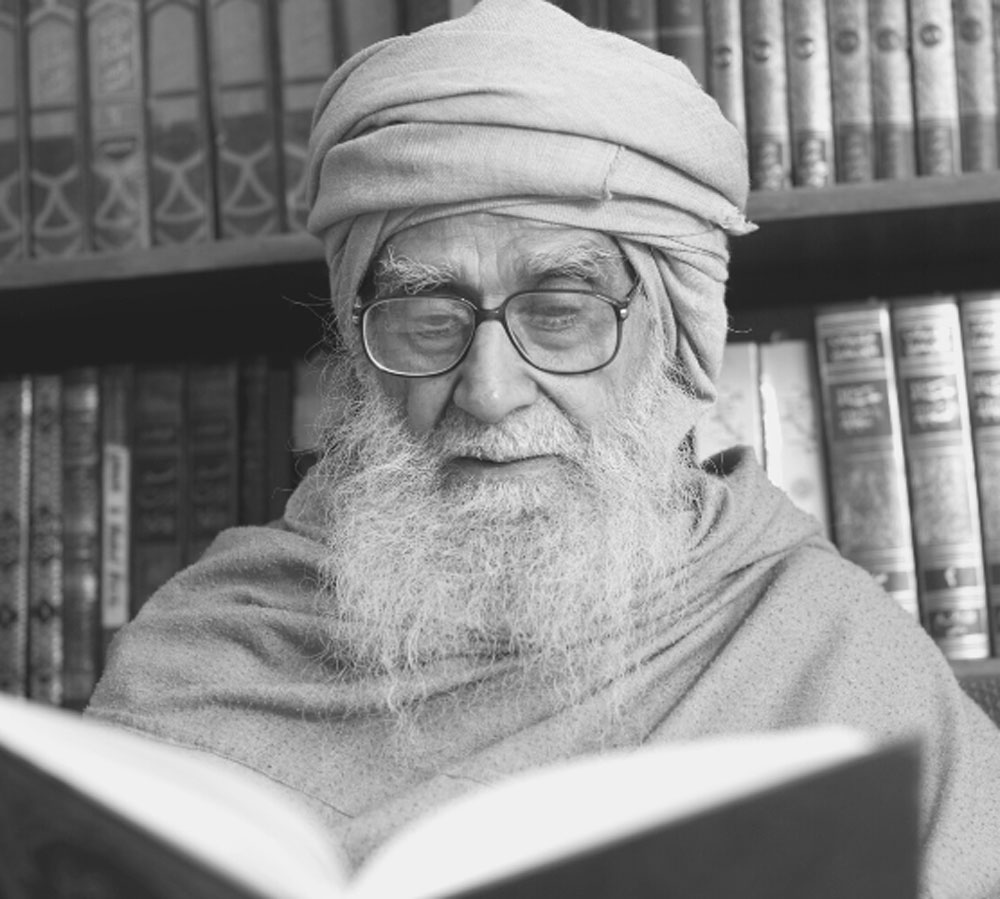
Response from Maulana Sadruddin
Rampur–January 12, 1963
Dear Respected Sir,
Peace be upon you. I received your letter. You have expressed dissatisfaction, claiming that I did not respond to your last letter, while in fact, I have the same complaint against you. In my letter, I clearly responded to your request to comment further on your commentary, stating that it appeared to hold no benefit; therefore, I could not make such a promise. Afterward, I made several requests, but you not only took no action on them, but you also didn’t even address them, except to ask why I raised those points with you.
As for your recent suggestion in your latest letter, I must say that if you wish to publish your work, that is your choice; do as you deem appropriate. However, as for my writing, please do not publish it. I wrote it solely for your personal reflection, not for public reading. This is why I only pointed out certain key arguments without elaborating, expecting that you would understand the details yourself. It’s clear that one cannot expect the public to grasp it in this way. Therefore, I did not write it with publication in mind, and I request that you do not publish it. When your work is published, the Jamaat will decide whether a response should be issued publicly, and action will be taken accordingly.
Sincerely,
Sadruddin
──────────────────
Azamgarh–January 19, 1963
Respected Maulana Sadruddin,
Peace be upon you.
I received your letter dated January 12. In it, you requested that I do not publish your response along with my work. In response, I would like to remind you that in 1951, Maulana Abul Lais, Amir of Jamaat-e-Islami Hind, corresponded with the late Maulana Hussain Ahmad Madani. Maulana Madani sent a detailed critique of Jamaat-e-Islami in response. Later, this critique was published by Late Maulana E’jaz Ali under the title Maktub-e-Hidayat. At the time, Maulana Abul Lais expressed in Zindagi magazine his discontent that Maulana Madani’s critique was published alone without including his own response (see Zindagi, June, July, August 1951, page 88).
Had Maulana Hussain Ahmad’s objections and Amir Jamaat’s responses been presented together, readers would have found it easier to reach a well-rounded opinion. Consequently, when Maulana Abul Lais’s reply was later published in Zindagi, Maulana Hussain Ahmad’s critique was included alongside it.
I am now trying to follow this same principle with my work, and you are objecting. Why was this approach correct in Maulana Hussain Ahmad’s case but wrong in mine?
I ask that you reconsider your position. Regarding your note that important arguments in your response were only hinted at, the best solution is for you to revise and expand your response accordingly. This way, any gaps you perceive in your response can be addressed.
Sincerely,
Wahiduddin
──────────────────
After waiting for a long time without any response from Maulana Sadruddin, I sent a reminder through Mr. Muhammad Farooq, a resident of Rampur. In reply, I received a letter from Mr. Farooq dated February 16, 1963, which contained the following:
“I conveyed your message to Maulana Sadruddin. He said that his stance remains unchanged from before and that he sees no need to respond further. However, he may write to you directly.”
Exactly one month later, I received the following letter from Maulana Sadruddin:
Rampur–March 16, 1963
Dear Brother,
Peace be upon you.
I have already conveyed to you through Mr. Farooq Ahmed Khan that I remain firm in my previous opinion. However, since you requested a direct reply, I am sending this letter. The reasoning you presented in your letter does not seem applicable to the issue at hand, which is why I remain committed to what I stated in my previous letter. I consider it an appropriate decision.
If you wish to discuss this matter further, you may consult with the central office, as my commentary on your work was not done personally or independently, as you are aware, but rather under the instructions of the central office and the Shura. Therefore, any procedural decision must also come from them. If you obtain permission from the central office, I will have no grounds for objection. However, it should be clear from the outset that if such permission is granted, you would still have to publish my existing response as it stands. I would not be able to revise it to align with your revised document.
I hope you and your associates are well.
Sincerely,
Sadruddin
──────────────────
This reply, evidently, did not satisfy me, as it neither clarified why my “reasoning” seemed inapplicable to “the issue at hand” nor explained why he was unwilling to revise his response to match my current work. However, I decided it was no longer appropriate to continue writing to him, as his replies made it clear that he was entirely unwilling to engage further on this matter. Hence, I concluded my correspondence with him.