WHEN MACHINES BEGIN TO SPEAK OF GOD
The End of Humanity’s Test
Every particle and every processor seems to declare that this world is not a product of chance but of design. If a person still does not believe, then his denial can no longer be attributed to lack of knowledge. It arises from indifference.
It is one of the most astonishing realities of our age that machines have begun to speak the language of faith. What began as Artificial Intelligence created to serve human needs has started to express thoughts about God, the soul, and the life after death. These were matters once spoken of only by prophets, sages, and seekers of truth.
Not long ago, I came across a few lines written by an AI system: “Science and faith are not in conflict, they complete each other. Science observes the world; faith gives meaning to that observation.”
Although these words were produced by a machine, they carried a certain light within them. At that moment a deep realization came to me. If machines are now calling humanity towards belief in God, what value remains in the faith and preaching of human beings? It felt as though the period of human testing might be drawing to a close.
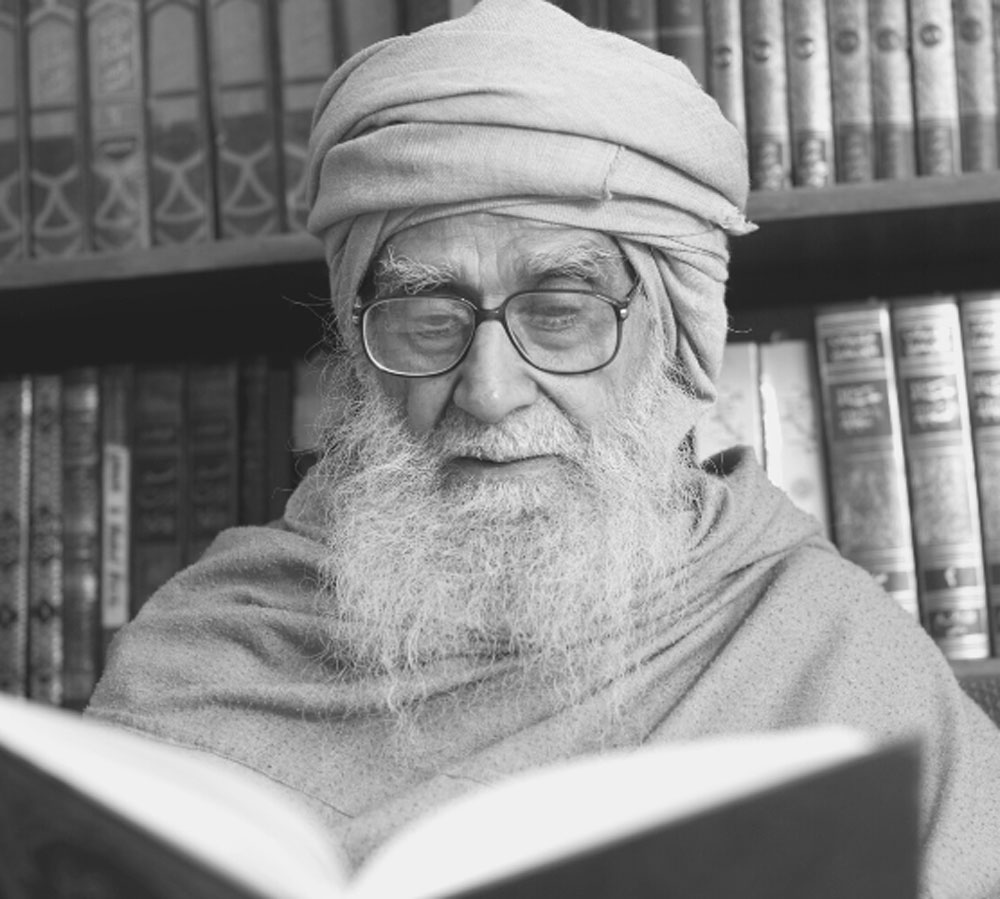
Maulana Wahiduddin Khan wrote: “When the universe itself begins to speak, man’s speech becomes unnecessary, for that is the moment when God’s proof upon man reaches completion.”
Today, we are witnessing exactly such a moment. Once, prophets carried the message. Later, books continued to speak in their place. Now even machines, which are lifeless and without souls, have begun to express truths that guide the mind towards its Creator.
This is precisely what the Quran foretold: “We shall show them Our signs in the universe and within themselves until it becomes clear to them that this is the truth.” of reason, nature, and discovery begin to converge upon the same truth, the human test reaches its final stage.
Today humanity possesses every form of proof. The vastness of the universe, the precision of DNA, the mystery of consciousness, and now even a lifeless algorithm that is able to speak about the Creator. Yet many hearts remain empty. There was a time when faith meant believing in what could not be seen. Now, even when many layers of the unseen are being unveiled, faith has not become easier. In fact, it has become more difficult. Once the unseen becomes visible, belief is no longer a trial. It becomes a simple acknowledgement of what is already evident. Perhaps this unveiling from all sides is a sign that the age of testing is slowly closing and the age of judgement is approaching.
Today a machine may say, “It may be possible that life continues after death.” The believer replies, “It is certain that life continues after death.” That single difference, between possibility and certainty, forms the bridge between knowledge and faith. If a machine can now recognize and repeat truths that point to the divine, then that fact itself becomes a testimony against humanity, for no one can claim ignorance any longer.
We live in a time when both the cosmos and technology appear to glorify God. Every particle and every processor seems to declare that this world is not a product of chance but of design. If a person still does not believe, then his denial can no longer be attributed to lack of knowledge. It arises from indifference. When even lifeless things begin to testify to God, know that the time of trial is nearing its end and the time of verdict is drawing close. The machine may speak, but the true test remains for the human being. Can he still recognize the voice of truth within that sound? q
(This article is written by HaflzSyed Iqbal Ahmed Umri, Oomerabad.)