By Mushtaq Ul Haq Ahmad Sikander, New Age Islam
21 October 2026
Maulana Wahiduddin Khan’s Islamic Parenting Urges Parents to Combine Love, Discipline, Education, And Moral Example to Nurture a Child’s True Potential
Main Points
- The book argues that upbringing is more than providing food, clothes, and affection; it involves shaping conscience, responsibility, and intellectual capacity.
- Children learn chiefly through the family environment—parents’ speech, anger management, treatment of elders, and everyday conduct—rather than through lectures or outward religious symbols.
- Khan criticizes excessive indulgence and “child worship,” warning that material comfort without discipline can produce dependence, impatience, and an inability to face reality.
- Children should learn obligations to family, society, and God. They must also understand that actions have consequences, while parents model self-control and maintain a healthy marital relationship.
- Education is presented as the best gift parents can give, with strong support for girls’ education; parents should avoid imposing unfulfilled dreams and instead cultivate planning, perseverance, and initiative.
Islamic Parenting: Nurturing Your Child’s True Potential
Author: Maulana Wahiduddin Khan
Translated and edited by: Prof. Farida Khanam
Publisher: Goodword Books, New Delhi NCR, India
Year of publication: 2024
Pages: 127
Price: Not Mentioned
ISBN: 978935479813
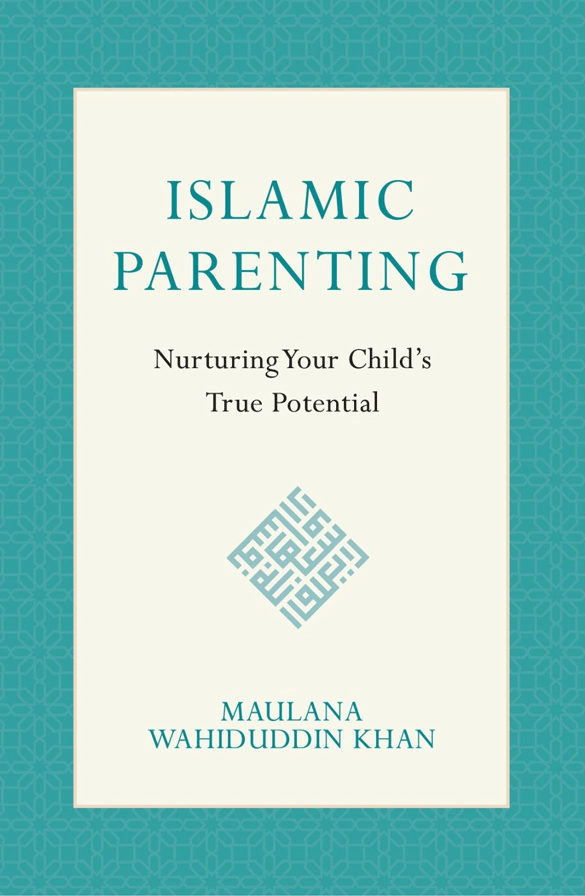
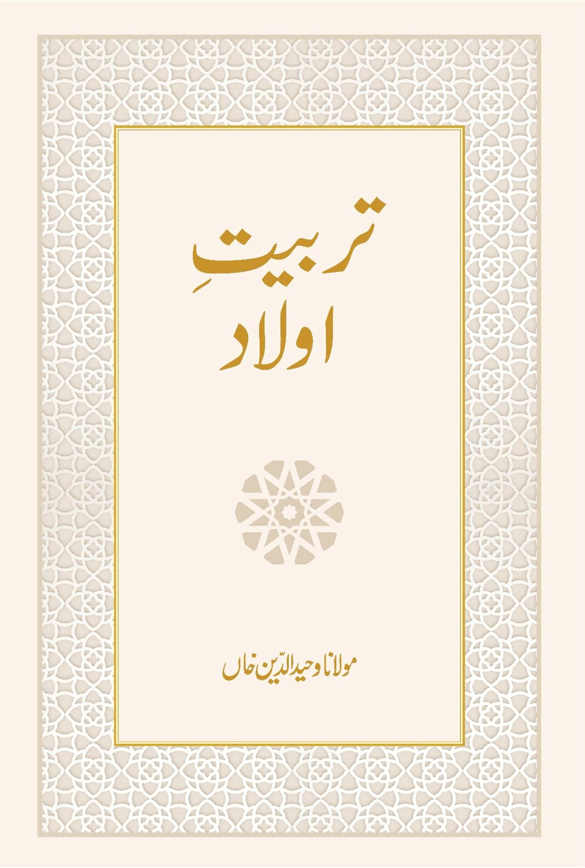
Islamic Parenting: Nurturing Your Child’s True Potential is a compact but morally serious book by Maulana Wahiduddin Khan, translated by Prof. Farida Khanam. It is an English rendering of Khan’s Urdu work Tarbiyat-e-Aulad (2019), and its central argument is refreshingly direct: parenting is not merely feeding, clothing, and affectionately indulging children; it is the deliberate formation of character, conscience, responsibility, and intellectual capacity.
The book does not attempt to be a comprehensive manual of child psychology or a technical guide to modern pedagogy. Its strength lies elsewhere. It speaks to parents in a language of moral clarity, urging them to examine their own conduct before demanding virtue from their children. Khan’s recurring message is that the home is the first school, parents are the first teachers, and the child’s environment is more formative than lectures, sermons, or outward religious symbols.
Author, Translator and Context
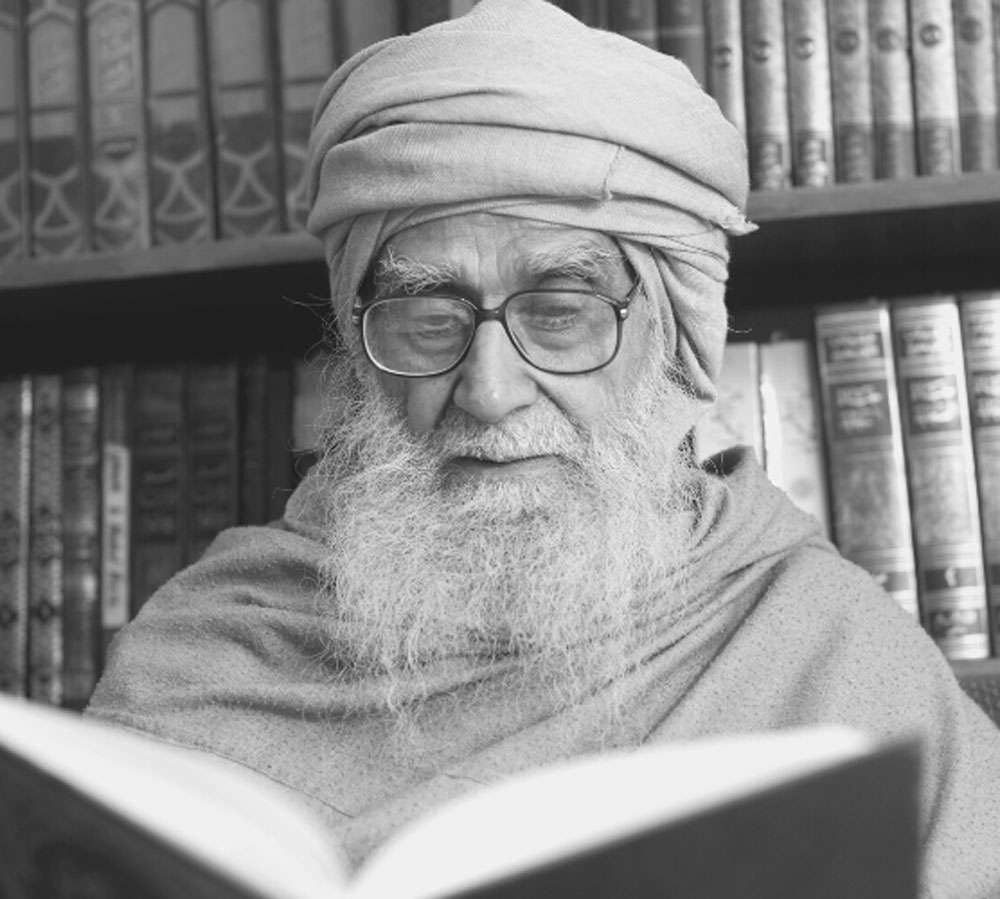
Maulana Wahiduddin Khan (1925–2021) was an influential Indian Islamic scholar, peace activist, and prolific author, known for presenting Islamic teachings in a contemporary idiom. Prof. Farida Khanam, his daughter, is an Islamic scholar and translator who has edited and translated several of his works, including his Quranic commentary. Her translation gives the book a smooth, accessible English style that preserves the author’s didactic and pastoral tone.
The book emerged from Khan’s concern that modern parents often mistake material provision for upbringing. He argues that many parents are serious about their children’s clothes, food, education, and future security, but not sufficiently serious about cultivating their inner lives. The foreword makes this explicit, the greatest guarantee of a child’s progress lies in cultivating a realistic approach and a spirit of action, rather than depending on inherited wealth or parental intervention.
The Home as the First Madrasa
One of the book’s most persuasive ideas is that a better home makes a better society. Khan treats the family not as a private refuge detached from public life, but as the primary institution through which values are transmitted. Children learn before they are consciously taught. They observe how parents speak, manage anger, treat elders, respond to failure, handle money, and relate to neighbours, servants, and strangers.
This makes the book deeply relevant in an age when parenting is often reduced to school selection, tuition classes, gadgets, and examination results. Khan shifts attention from achievement to formation. A child may score high marks yet remain emotionally immature, irresponsible, or spiritually hollow if the home offers no model of patience, gratitude, discipline, and ethical conduct.
The author’s emphasis on cultivating a conducive religious and moral environment at home is particularly valuable. He does not present Islam merely as ritual observance. Rather, he presents it as a comprehensive way of living that shapes conduct, relationships, and priorities. This is an important corrective to a superficial understanding of tarbiyah, in which religious identity is reduced to external markers rather than internal transformation.
Against Pampering and “Child Worship”
Perhaps the most striking section of the book is Khan’s critique of pampering. He argues that excessive parental affection, when unaccompanied by discipline and responsibility, disconnects children from reality. Pampered children may grow up expecting the world to adjust to their desires. They may lack endurance, gratitude, and the capacity to face difficulty.
Khan’s phrase “child worship” captures a contemporary pathology with unusual precision. Many parents devote their entire lives to accumulating wealth, property, and inheritance for their children, believing that this is the highest expression of love. The author challenges this assumption. Material wealth, he insists, does not determine a child’s true success, diligence, planning, hard work, and a realistic outlook matter more.
This argument has social relevance beyond religious parenting. In many middle-class and affluent families, children are shielded from household responsibilities, failure, and inconvenience. Parents fulfil every demand, resolve every conflict, and sacrifice their own needs to satisfy their children. Khan warns that such love can become blindness. Parents may turn a blind eye to the mistakes of family members, thereby preventing correction, accountability, and growth.
The book therefore asks parents to distinguish love from indulgence. Love seeks the child’s long-term welfare; indulgence seeks immediate approval. Love prepares a child for life; indulgence disables the child for life. This is not a call for harshness. Khan’s tone is compassionate, but he refuses to romanticize parental sacrifice when it produces dependence rather than maturity.
Duty, Consequences, and Emotional Discipline
A major theme of the book is duty consciousness. Children must be taught that they have obligations toward family, society, and God. They should learn to share, serve, respect elders, care for others, and understand that rights are accompanied by responsibilities. Khan believes that a child who is trained only to receive will struggle to become a constructive member of society.
Equally important is his insistence that children understand the consequences of their actions. Modern parenting often protects children from every unpleasant consequence, whether academic failure, social conflict, or moral error. Khan suggests that such protection can be harmful. Children need guidance, but they also need to learn that choices have results. This prepares them for adult life, where responsibility cannot be permanently outsourced to parents.
The author also highlights emotional discipline. Parents must learn to control anger, endure personal losses, and guide family members wisely. This is a profound point because children are often damaged less by explicit teachings than by the emotional climate of the home. A household marked by shouting, resentment, anxiety, or mutual blame teaches children insecurity, even if parents verbally instruct them to be calm and pious. Khan’s advice that spouses should not allow children to become the sole focus of their relationship is also noteworthy. When a marriage becomes entirely child-centred, spouses may grow emotionally distant from one another. The child, instead of being nurtured within a stable partnership, becomes the object of anxious over-investment. A healthy family requires attention to the marital bond as well as to children.
Education as the Best Gift
The book’s strongest and most consistent emphasis is education. Khan describes education as the best gift parents can give a child. For him, education is not simply the acquisition of certificates or employment-oriented skills. It creates awareness, broadens vision, and enables individuals to understand themselves and the world.
He warns against “intellectual dwarfism,” a condition in which individuals or families remain mentally narrow despite material comfort or social status. This is an important critique for communities that value wealth, lineage, ritual identity, or social prestige more than learning. Khan argues that no genuine progress is possible without education.
His examples give this argument historical depth. He refers to the Japanese emphasis on education after the devastation of 1945, presenting it as evidence that nations can rebuild through knowledge, discipline, and collective effort. He also recalls the Battle of Badr, where Muslim captors learned from non-Muslim prisoners who could teach reading and writing. Khan presents this as an early educational institution among Muslims. These examples broaden the book beyond domestic advice and connect parenting to civilizational renewal.
The author’s concern for girls is especially commendable. He explicitly rejects discrimination against girl children and affirms women’s education. In a context where gender prejudice still affects access to schooling and opportunity in many societies, this is not a minor point. It makes the book a useful text for parents, teachers, community leaders, and religious educators who wish to promote educational justice within an Islamic framework.
Modern Challenges: Screens and Triviality
Khan criticizes television culture and screen addiction for weakening teaching, distracting children, and replacing meaningful engagement with passive consumption. In today’s environment of smartphones, short videos, gaming, and social media, his warning is even more urgent than when it was first written.
He also warns parents against becoming entangled in trivial issues while neglecting important matters. Families often expend enormous emotional energy on minor disputes—food, dress, status, gossip, or petty comparisons, while ignoring character, education, mental health, and spiritual growth. Khan’s advice is to prioritize wisely. Parenting requires discernment: not every issue deserves a battle, but essential values must not be compromised.
Role Models, Realism, and Action
Khan repeatedly reminds parents that they are role models. Children may ignore advice but rarely fail to notice example. A parent who demands honesty while practising deceit, or preaches humility while displaying arrogance, will not produce the desired character in children. The book therefore makes parenting a project of self-reform. Before correcting the child, the parent must correct himself or herself.
The author also urges realistic expectations. Parents should not impose their unfulfilled dreams on children or become shattered when children do not meet idealized expectations. Every child has distinct abilities, limitations, and circumstances. The parental task is to recognize these and help the child develop accordingly. This realistic approach prevents disappointment and allows children to grow with dignity rather than under the burden of parental fantasy.
Finally, Khan stresses the spirit of action. He believes that children must be trained not merely to dream but to work, plan, persevere, and take initiative. Success is not bestowed by others, it is earned through effort. This practical orientation gives the book a constructive, forward-looking character.
Limitations
The book has limitations. Its chapters are brief and aphoristic, so readers seeking detailed strategies for dealing with adolescence, bullying, digital safety, mental health, special needs, or modern schooling may find it insufficiently specific. Some arguments are moral generalizations rather than empirically grounded analyses. The repeated references to the author’s organization and its materials may also distract readers looking for a more universally framed parenting guide.
Yet these limitations do not diminish its value. The book is not meant to be a clinical manual. It is a moral invitation, an appeal to parents to recover seriousness, balance, and purpose in raising children.
Conclusion
Islamic Parenting: Nurturing Your Child’s True Potential is a wise, accessible, and timely book. Its enduring contribution is its refusal to separate spirituality from responsibility, love from discipline, or education from character. Maulana Wahiduddin Khan reminds parents that the future of a child and indeed of society begins at home. This is a book that deserves to be read not only by Muslim parents but by all parents seeking to raise responsible, educated, compassionate, and self-reliant children.